By Dave Henderson, 16 years in the ladder hitch rack and hitch-mounted cargo carrier industry, founder of a contractor outfitting shop in Denver, hands-on experience purchasing and installing Curt, Reese Towpower, Draw-Tite, and B&W trailer hitches on over 2,000 contractor and personal vehicles, daily driver of a 2020 Ford F-250 with a Kargo Master Pro III hitch rack.
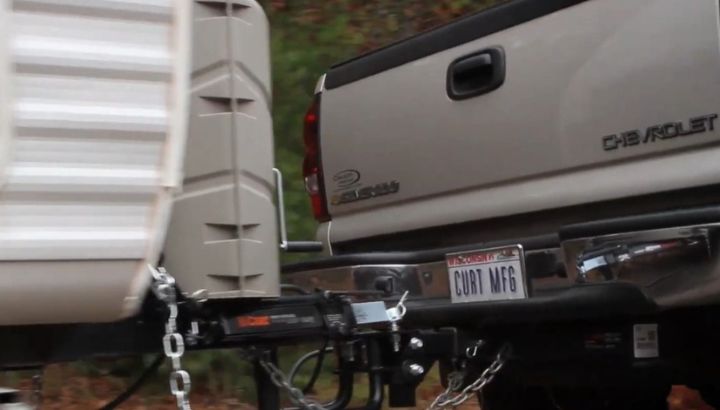
A trailer hitch costs between $150 and $400 for the hitch unit alone, with professional installation adding $100 to $400 in labor. Total turnkey cost runs $300 to $800 depending on the hitch class (I-V), the vehicle make and model, and whether you DIY or pay for professional installation.
The price varies widely because Class I receivers for compact cars cost as little as $130, while Class V receivers for heavy-duty pickups can hit $400-$500. Installation labor adds another $100-$200 for bolt-on installs on modern SUVs and $200-$400 for welded installs on classic cars or vehicles without factory provisions. To know how much does a trailer hitch cost for your specific vehicle, you need the hitch class, the installation method, and the brand tier.
What Determines How Much A Trailer Hitch Costs?
A trailer hitch costs vary based on five factors: hitch class (I through V), brand tier (budget vs premium), vehicle-specific fitment complexity, installation method (bolt-on vs welded), and whether trailer wiring is added. Class III bolt-on installs on common SUVs typically run $300-$500 turnkey.
This article covers permanent trailer hitch receiver pricing specifically, not gooseneck hitches, fifth-wheel hitches, weight-distribution hitches, or pintle hitches. Each of those is a separate category with different pricing structures.
Trailer hitch pricing falls under the broader category of vehicle towing equipment regulated by SAE J684 hitch class standards. The class rating directly determines the steel thickness, mounting hardware complexity, and structural engineering required, which all influence the price.
The five factors that drive trailer hitch cost:
The hitch class is the primary cost driver. Class I receivers (200 lbs tongue weight) cost $130-$180. Class II receivers (350 lbs) cost $150-$220. Class III receivers (500-600 lbs) cost $180-$280. Class IV receivers (800-1,200 lbs) cost $240-$350. Class V receivers (1,200-2,700 lbs) cost $300-$500.
The brand tier affects price within each class. Budget brands like Reese Towpower and basic Curt models run $150-$220 for Class III. Premium brands like B&W, Andersen, and CURT Premium add $50-$100 for stainless hardware, lifetime structural warranty, and tighter manufacturing tolerances.
Vehicle-specific fitment complexity adds cost on rare or modified vehicles. A Curt Class III hitch for a 2020 Toyota RAV4 costs $180-$200 because the fitment is common and high-volume. The same Class III hitch for a 2015 Tesla Model X costs $350-$400 because the fitment is low-volume and requires specialized brackets.
The installation method (bolt-on vs welded) determines labor cost. Bolt-on installs on modern vehicles with factory provisions run $100-$200 in labor. Welded installs on classic cars, modified vehicles, or commercial vehicles run $200-$400 in additional labor.
Trailer wiring adds optional cost. A 4-pin flat connector for basic trailer lighting costs $30-$80 installed. A 7-pin RV connector for trailers with electric brakes costs $80-$200 installed, plus a brake controller at $80-$250.
On my own 2020 Ford F-250, the factory Class IV receiver was included as standard equipment at zero additional cost. My wife’s 2019 Subaru Outback came with a factory Class III receiver. Most modern SUVs and pickups now include a hitch as standard or as a low-cost factory option ($300-$500 on the build sheet).
The takeaway: trailer hitch cost is driven by class, brand, vehicle fitment, installation method, and optional wiring, with $300-$500 covering the most common Class III bolt-on install.
What Are The Price Ranges For Each Hitch Class?
Class I trailer hitches cost $130-$180, Class II costs $150-$220, Class III costs $180-$280 (the standard for SUVs and pickups), Class IV costs $240-$350, and Class V costs $300-$500. Premium brands add $50-$100 per class over budget brands.
Here is a reference table of hitch class pricing across major US brands:
| Hitch Class | Receiver Opening | Budget Brand Price | Mid-Tier Brand Price | Premium Brand Price | Typical Vehicles |
|---|---|---|---|---|---|
| Class I | 1.25 inch | $130-$160 (Reese Towpower) | $150-$180 (Curt) | $180-$210 (CURT Premium) | Compact cars, subcompacts |
| Class II | 1.25 inch | $150-$180 (Reese Towpower) | $170-$220 (Curt) | $200-$260 (Draw-Tite) | Midsize sedans, small SUVs |
| Class III | 2 inch | $180-$220 (Reese Towpower) | $200-$260 (Curt) | $240-$320 (B&W) | SUVs, crossovers, minivans |
| Class IV | 2 inch | $240-$280 (Reese Towpower) | $260-$320 (Curt) | $300-$400 (B&W) | Full-size pickups, large SUVs |
| Class V | 2.5 inch | $300-$360 (Reese Towpower) | $340-$400 (Curt) | $400-$500 (B&W Tow & Stow) | Heavy-duty pickups, commercial |
The class breakdown matters because most buyers shop by vehicle type rather than by hitch class needed.
Class I hitches are the lightest duty and fit compact sedans like the Honda Civic, Toyota Corolla, Hyundai Elantra, and similar subcompact crossovers. With 200 lbs tongue weight capacity, Class I handles 1-2 bike hanging racks and small utility trailers up to 2,000 lbs gross weight.
Class II hitches double the capacity to 350 lbs and remain 1.25-inch openings. Class II fits midsize sedans like the Toyota Camry, Honda Accord, and small SUVs like the Subaru Crosstrek and Honda HR-V. The capacity handles 2-3 bike racks and small utility trailers up to 3,500 lbs.
Class III hitches are the workhorse class for most US passenger vehicles. The 2-inch opening accepts the full range of hitch-mounted accessories. Class III fits full-size SUVs (Toyota Highlander, Honda Pilot, Ford Explorer), crossovers (Subaru Outback, Mazda CX-5), and most minivans (Honda Odyssey, Toyota Sienna).
Class IV hitches add heavy-duty capacity for full-size pickups and large SUVs. The 2-inch opening handles 6-bike vertical racks, heavy hitch ladder racks, and trailers up to 14,000 lbs gross weight. Class IV fits Ford F-150 and F-250, Chevy Silverado 1500 and 2500, RAM 1500 and 2500, and Toyota Tundra.
Class V hitches use a 2.5-inch opening and fit heavy-duty pickups like the Ford F-350, F-450, Chevy Silverado 3500, RAM 3500, and commercial vehicles. The capacity handles industrial loads and trailers up to 20,000 lbs gross weight.
The takeaway: match the hitch class to your actual towing and accessory needs, and budget $50-$100 more for premium brands with lifetime warranties.
How Much Does Professional Trailer Hitch Installation Cost?
Professional trailer hitch installation costs $100 to $400 in labor depending on the vehicle, installation method, and installer. U-Haul charges $100-$200 for bolt-on installs, etrailer affiliates charge $150-$250, local hitch shops charge $150-$300, and dealerships charge $250-$500.
The installation cost varies significantly based on where you take the work and what type of install your vehicle requires.
U-Haul is the most cost-effective option for standard bolt-on installs. U-Haul charges $100-$200 for Class III installations on common vehicles with factory provisions. The installation takes 60-90 minutes and includes the hitch pin and clip. Wiring installation is separate at $50-$120 for 4-pin connections.
Etrailer-affiliated installers are mid-tier in pricing and quality. The network charges $150-$250 for typical bolt-on installs and provides workmanship warranty coverage. Etrailer also sells the hitch units online with installation discounts when you buy the hitch from them.
Local hitch shops vary widely in pricing and quality. Independent shops charge $150-$300 for bolt-on installs and $200-$400 for welded installs. The benefit of local shops is faster scheduling and the ability to handle custom or older vehicles that the chains will not work on.
Dealerships charge the most at $250-$500 for trailer hitch installation. The premium comes from dealer labor rates ($120-$180 per hour vs $80-$100 at independent shops). Dealerships handle warranty coverage cleanly for new vehicles, which can justify the higher cost for vehicles under warranty.
DIY installation drops the total cost to $0 in labor, requiring only the hitch unit ($180-$280) plus basic tools ($40-$120 for a torque wrench if you don’t own one). The install takes 1-2 hours on most modern SUVs with factory provisions and requires basic mechanical skills.
The major installation cost variables are vehicle complexity (modern SUVs are cheapest, classic cars and modified vehicles are most expensive), required modifications (heat shield drops, exhaust removal, bumper trimming add $50-$150 each), wiring complexity (4-pin flat is cheapest, 7-pin RV with brake controller is most expensive), and welded vs bolt-on installation method.
On a recent install for a client’s 2021 Honda Pilot, the total cost broke down as: Curt Class III hitch ($210), U-Haul installation labor ($150), and 4-pin wiring kit installation ($75). Total turnkey was $435, which is typical for Class III on a modern SUV.
The takeaway: U-Haul is cheapest, etrailer affiliates are mid-tier, dealerships are most expensive, and DIY saves $100-$300 in labor.
What Brands Offer The Best Value For Trailer Hitches?
The best value trailer hitch brands are Reese Towpower (budget, $150-$280), Curt (mid-tier, $180-$320), Draw-Tite (mid-tier, $200-$320), and B&W (premium, $240-$500). Curt offers the best balance of price, quality, and fitment coverage for most US vehicles.
Each major US trailer hitch brand has distinct strengths and price positioning.
Reese Towpower is the budget value leader. Reese hitches use slightly thinner steel than premium brands but meet SAE J684 hitch class standards with lifetime structural warranty. Class III Reese hitches run $150-$220, which is $30-$50 cheaper than equivalent Curt models. Quality is adequate for occasional towing and bike rack use.
Curt is the mid-tier volume leader with the broadest vehicle fitment coverage. Curt hitches come in vehicle-specific kits for nearly every car, truck, and SUV in the US market. Class III Curt hitches run $180-$280, which is the median price point. Lifetime structural warranty plus 5-year finish warranty.
Draw-Tite is the mid-tier premium option owned by Horizon Global (same parent as Reese Towpower). Draw-Tite uses heavier-duty steel construction than Reese and includes powder coat finish with rust resistance. Class III Draw-Tite hitches run $200-$320 with lifetime warranty.
B&W is the premium brand for serious tow users. B&W hitches feature stainless steel hardware, tighter manufacturing tolerances, and the Tow & Stow ball mount system that integrates with the receiver. Class III B&W hitches run $240-$320 and Class V runs $400-$500.
CURT Premium is the high-end Curt sub-brand with additional features like locking pin cylinders, powder coat plus clear coat finish, and 10-year structural warranty. Class III CURT Premium hitches run $240-$320 versus $180-$280 for standard Curt.
For most buyers, Curt offers the best balance of price, quality, vehicle fitment, and warranty coverage. Reese Towpower is the right choice for budget builds and occasional use. B&W is the choice for heavy towing and premium vehicle owners who want the integrated Tow & Stow system.
On my own contractor truck installs, I default to Curt for standard customer jobs and B&W for premium customer requests. The Curt covers 90% of installs at the right price point, while B&W justifies its premium on heavy-tow setups.
The takeaway: Curt is the volume leader for value, Reese is the budget leader, B&W is the premium choice, and CURT Premium splits the difference between Curt and B&W.
What Hidden Costs Add To The Total Trailer Hitch Price?
Hidden trailer hitch costs include the hitch pin and clip ($5-$25), the ball mount with the right drop ($40-$120), the trailer ball at the correct size ($15-$40), trailer wiring kit ($30-$120), brake controller for heavy trailers ($80-$250), and supplemental lighting for bike racks blocking taillights ($45-$80).
The hitch unit price is only the starting point for total setup cost.
The hitch pin and clip secures the ball mount or hitch accessory to the receiver. Standard 5/8-inch hitch pins cost $5-$10. Locking hitch pins with key cylinders cost $20-$25. Most hitches include a basic pin and clip, but locking pins are an upgrade.
The ball mount with the correct drop measurement runs $40-$120. Standard drop ball mounts (2-inch, 4-inch, 6-inch, 8-inch) from Curt and Reese cost $40-$80. Adjustable ball mounts like the Andersen Rapid Hitch and Weigh Safe cost $150-$350.
The trailer ball at the correct size for your trailer coupler runs $15-$40. Common sizes are 1-7/8 inch (1,500-2,000 lbs), 2 inch (3,500-8,000 lbs), and 2-5/16 inch (10,000+ lbs). Verify the ball size stamped on your trailer coupler before purchasing.
Trailer wiring kit cost depends on the connector type. A 4-pin flat connector kit (Curt 56146) costs $30-$80 installed and handles basic trailer lighting (brake, turn, running, license plate). A 7-pin RV connector kit costs $80-$200 installed and adds brake controller and auxiliary power circuits for travel trailers.
Brake controller adds $80-$250 for trailers with electric brakes. The Tekonsha P3 ($150-$200) and Curt Echo Bluetooth controller ($100) are the standard options. Required for any trailer over 3,000 lbs gross weight that uses electric brake assist.
Supplemental lighting for hitch bike racks or cargo carriers that block factory taillights costs $45-$80. The Wesbar 54209-012 kit ($55) and Optronics MCL40RB kit ($45) wire to the trailer connector and meet FMVSS 108 lighting requirements.
Anti-rattle hitch pin or hitch tightener costs $25-$50 for accessories that need to eliminate receiver-to-shank play. The Andersen Rapid Hitch tightener ($45), StableLoad ($25), and Yakima HitchLock ($35) are the leading options for bike racks and ladder racks.
A complete trailer hitch setup for a typical contractor truck with bike rack use ends up around $400-$600 total: hitch unit ($210), ball mount ($60), trailer ball ($25), wiring kit ($75), and anti-rattle pin ($45) total $415, plus optional installation labor at $150.
The takeaway: budget $100-$200 above the hitch unit price for accessories and wiring that complete the setup.
What Mistakes Do People Make When Buying A Trailer Hitch?
The five most common trailer hitch buying mistakes are choosing the wrong hitch class for future use, buying the cheapest brand without checking warranty terms, forgetting to budget for ball mount and trailer ball, skipping wiring installation that gets added later at higher cost, and paying for professional installation when DIY would work.
The specific buying mistakes I see most often after 16 years in the industry:
Choosing the wrong hitch class for future use is the most expensive mistake. A Class II receiver costs $30-$50 less than Class III but limits you to 350 lbs tongue weight and a 1.25-inch opening. Three years later when you want a 4-bike platform rack or trailer over 3,500 lbs, you have to buy and install a new Class III receiver. Total cost doubles compared to choosing Class III upfront.
Buying the cheapest brand without checking warranty terms backfires within a few years. Some budget brands offer 1-year or 5-year warranties versus the lifetime structural warranties on Curt, Reese Towpower, and Draw-Tite. Cracked welds or corrosion damage that would be covered under lifetime warranty becomes a $200-$300 out-of-pocket replacement on budget brands.
Forgetting to budget for ball mount and trailer ball doubles the perceived hitch cost. A $200 hitch unit becomes a $300 total setup once you add the ball mount ($60), trailer ball ($25), and hitch pin upgrade ($15). Plan the full setup budget before purchasing the hitch.
Skipping wiring installation during the hitch install costs more later. Installing the wiring at the same time as the hitch costs $30-$80. Adding it as a separate job later costs $80-$150 because the installer charges minimum shop time even for a 30-minute job.
Paying for professional installation when DIY would work wastes $100-$200 in labor. Modern bolt-on hitches require basic hand tools, a torque wrench, and 1-2 hours of garage time. If you have basic mechanical skills, DIY saves real money. If you don’t, professional installation is worth the cost for safety and warranty coverage.
On a job in Aurora last year, a customer brought me his 2018 Toyota 4Runner for a Class III hitch install. He had originally bought a budget Class II hitch for $130 to save money, but six months later needed a 2-inch receiver for his new Kuat NV 2.0 bike rack. The Class II hitch had to be removed and replaced with a Class III, costing him $200 in extra parts plus $150 in re-installation labor. The original Class III choice would have saved $350.
The takeaway: choose the right class the first time, budget for accessories, bundle wiring with hitch installation, and DIY if you have basic mechanical skills.
Frequently Asked Questions
How Much Does A Class III Trailer Hitch Cost?
A Class III trailer hitch costs $180 to $280 for the hitch unit alone, with the most common Curt and Reese Towpower models priced at $200-$240. Class III is the standard hitch class for SUVs, crossovers, and minivans, with a 2-inch receiver opening and 500-600 lbs tongue weight capacity.
Professional installation adds $100-$200 in labor, bringing total turnkey cost to $300-$500. U-Haul is typically the cheapest installer at $100-$200, while dealerships charge $250-$500. DIY installation drops the labor cost to zero but requires a torque wrench ($40-$120) and 1-2 hours of garage time. Verify your vehicle has factory bolt-on provisions before attempting DIY.
How Much Does U-Haul Charge To Install A Trailer Hitch?
U-Haul charges $100 to $250 for trailer hitch installation depending on the vehicle make, model, and hitch class. Bolt-on installations on modern SUVs and pickups with factory provisions run $100-$200 and take 60-90 minutes. Welded installations on classic cars or vehicles without factory provisions run $200-$300 plus.
U-Haul also charges separately for trailer wiring installation. A 4-pin flat connector adds $50-$120, while a 7-pin RV connector adds $100-$200. U-Haul sells hitch units at standard retail pricing ($180-$280 for Class III) and offers package discounts when you buy the hitch and pay for installation together. Total turnkey cost runs $300-$500 for a standard Class III install with basic wiring.
Is It Cheaper To Install A Trailer Hitch Yourself?
Yes, DIY trailer hitch installation is significantly cheaper than professional installation, saving $100-$400 in labor depending on your area. The DIY cost includes only the hitch unit ($180-$280) and basic tools ($40-$120 for a torque wrench if you do not already own one). Total DIY cost runs $200-$400 versus $300-$700 for professional installation.
DIY installation requires basic mechanical skills, 1-2 hours of garage time, a torque wrench, a socket set, a floor jack, and jack stands. Modern bolt-on hitches on vehicles built after 2005 typically use factory pre-drilled provisions that require no drilling or welding. Verify your vehicle has bolt-on provisions using the Curt or Reese fitment guide before attempting DIY.
How Much Does It Cost To Have A Trailer Hitch Installed At A Dealership?
Dealership trailer hitch installation costs $250 to $500 in labor, which is the most expensive option among installation providers. The premium comes from dealer labor rates of $120-$180 per hour versus $80-$100 per hour at independent shops and chain installers like U-Haul.
The benefit of dealership installation is clean warranty coverage for vehicles under factory warranty. Dealerships use OEM or OEM-equivalent hitches and follow factory installation procedures, which prevents warranty disputes if the install causes any damage. For vehicles out of warranty or older than 5 years, the dealership premium is rarely justified compared to U-Haul, etrailer, or local hitch shops.
How Much Does A Trailer Hitch With Wiring Cost?
A trailer hitch with wiring costs $230 to $480 for parts alone (hitch unit at $180-$280 plus 4-pin wiring kit at $50-$80 or 7-pin RV kit at $80-$200). Professional installation of both the hitch and wiring together costs $150-$350 in labor, for a total turnkey cost of $380-$830.
The wiring complexity drives most of the cost variation. A 4-pin flat connector for basic trailer lighting (brake, turn, running, license plate) is the cheapest option and handles utility trailers up to 3,000 lbs. A 7-pin RV connector adds brake controller power and auxiliary circuits for travel trailers, requiring a brake controller at $80-$250 additional. Bundle the wiring with the hitch installation to save $30-$80 versus adding it as a separate job later.
Why Are Trailer Hitches So Expensive On Some Vehicles?
Trailer hitches cost more on some vehicles because the fitment is low-volume, the installation requires specialized brackets, or the vehicle frame requires welded mounting rather than bolt-on. Common vehicles like Toyota RAV4, Honda Pilot, and Ford F-150 have high-volume fitment with $180-$240 hitch prices, while rare or specialty vehicles can run $350-$500.
Tesla Model X, BMW X5, Porsche Cayenne, and other premium vehicles often have $300-$500 hitches because the fitment requires specialized brackets and lower production volumes mean higher per-unit cost. Modified vehicles like lifted trucks or custom builds may require welded installation at $200-$400 in additional labor. Verify pricing for your specific vehicle using the Curt, Reese Towpower, or Draw-Tite fitment guides before assuming standard pricing applies.
The Bottom Line On How Much Does A Trailer Hitch Cost
A trailer hitch costs $300 to $800 turnkey including the hitch unit ($150-$400), professional installation labor ($100-$400), and basic accessories like the hitch pin and ball mount. Class III bolt-on installs on common SUVs typically run $300-$500 total.
DIY installation saves $100-$300 in labor and is straightforward on modern vehicles with factory bolt-on provisions. Curt offers the best balance of price and quality at the mid-tier, while Reese Towpower is the budget leader and B&W is the premium choice for heavy towing.
Budget an extra $100-$200 above the hitch unit for ball mount, trailer ball, wiring, and accessories that complete the setup. Choose Class III for SUVs and Class IV for full-size pickups to avoid future upgrade costs.