Last updated: May 25, 2026
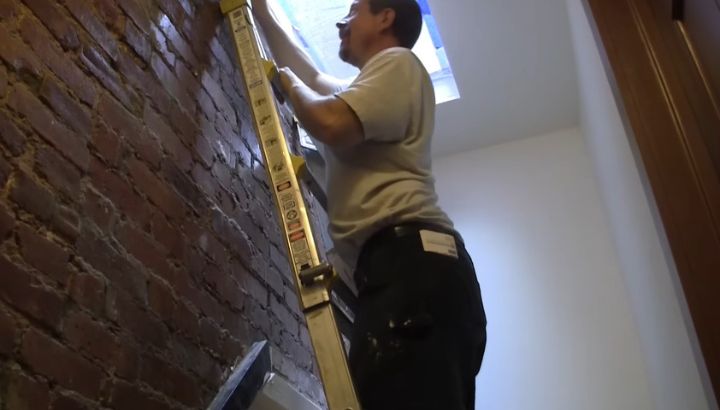
Use a ladder on a staircase by setting an extension ladder with one rail on the upper landing and the other rail extended to reach a lower step, or by using a dedicated multi-position ladder with adjustable legs (like a Little Giant Velocity or Werner MT-22) that locks each leg to a different stair height. Never use a step ladder open across stairs. The base must be level side-to-side within 1.5 degrees, and both feet must contact solid stair treads, not the riser face.
Why Is Using A Ladder On A Staircase So Dangerous?
Using a ladder on a staircase is dangerous because the uneven base creates a side-to-side tilt that exceeds the lateral stability range of most ladders, causing 23,000 ER visits per year from stair-related ladder falls per CPSC injury data.
I have watched too many contractors and homeowners try to “make it work” on a stairwell with the wrong ladder. The problem is fundamentally geometric. A standard step ladder has four feet on a single plane. The moment you set it on stairs, two feet sit on one tread and two feet sit on a tread 7 to 8 inches lower. That creates a 12 to 18 degree lateral tilt, which is well past the 5 degree safe limit for any A-frame ladder.
An extension ladder leaned vertically on a stairwell wall has a different problem. The base feet must sit on a solid, level surface. A single stair tread is 9 to 11 inches deep on most residential stairs, which is barely wider than the footprint of an extension ladder base. One slip of the foot pad and the ladder kicks out backward down the stairs.
I lost a Werner D6228-2 28-foot extension ladder this way in 2019 doing a stairwell paint job in a Boulder townhouse. I had the base on a third-from-top stair tread without a stair stabilizer. When I leaned out to cut in along the ceiling, the bottom kicked, the ladder bounced off three risers, and I rode it down the stairwell. I cracked two ribs and put a hole in the drywall.
The takeaway: stairs were never designed as a ladder base, and almost every ladder accident on a staircase traces back to using the wrong type of ladder or skipping the leveling step.
What Type Of Ladder Should I Use On Stairs?
Use a multi-position articulating ladder (Little Giant, Werner MT, Cosco) with independent adjustable legs for stairwell work, or an extension ladder paired with a ladder leveler accessory. Never use a standard A-frame step ladder open across stairs.
The right tool here makes the difference between a routine paint job and an ambulance ride. There are three legitimate options.
A multi-position ladder is the gold standard for residential stairwell work. The Little Giant Velocity Model 17 has independently adjustable rails that lock in 1-inch increments from 14 inches up to 33 inches per leg. On a typical 7.5-inch stair rise, you set the downhill legs roughly 7.5 inches longer than the uphill legs and the ladder sits level. The Velocity 17 is rated 300 lbs (Type IA) and weighs 39 lbs.
The Werner MT-22 is the equivalent at the same price point ($199 to $249), with similar leg-locking geometry. The MT-22 in stair mode handles up to a single-stair rise difference cleanly.
The Cosco 11-foot multi-position is a budget option at $109 to $129. It works for occasional homeowner use but the leg-locking pins feel sloppier under load.
The second option is an extension ladder with a ladder leveler accessory. The Werner PK80-2 quick-click stair leveler clamps to the bottom of an extension ladder side rail and extends 9 inches downward to compensate for a single stair rise. List price around $69. This setup works for vertical access where you need to climb a stairwell wall, not for A-frame use across stairs.
The third option is a tripod orchard ladder converted for indoor stair use. These have a single rear leg that adjusts independently. The Hasegawa 12-foot tripod ladder is popular among professional painters working stairwells in older homes.
What does NOT work: any standard step ladder open across stairs, any extension ladder without a leveler on uneven stair treads, and any ladder set with one or more feet on the stair riser face instead of the tread surface.
The takeaway: spend $200 on a multi-position ladder or $70 on a leveler accessory. Both are cheaper than urgent care.
How To Use A Ladder On A Staircase (Step By Step)
Choose a multi-position ladder or an extension ladder with a leveler, measure your stair rise, adjust the downhill legs longer than the uphill legs by exactly the stair rise dimension, verify the ladder is level with a torpedo level, secure the base against the upper tread nose, and climb only with three points of contact.
The setup sequence that has kept me upright on hundreds of stairwell jobs:
Step 1: Measure The Stair Rise
Use a tape measure to measure the vertical distance from one stair tread to the next. Standard residential stairs are 7 to 7.75 inches per rise. Commercial stairs run 6 to 7 inches. Note this exact number because it determines how much you extend the downhill legs of the ladder.
Step 2: Choose The Correct Ladder Configuration
For a multi-position ladder, set it to stair mode with the A-frame opened. For an extension ladder with leveler, attach the leveler to the downhill side rail before bringing the ladder into the stairwell. The Werner PK80-2 clamps on with two thumb screws in about 90 seconds.
Step 3: Position The Ladder On The Stairs
Set the ladder with the front feet on the upper tread and the back feet on the lower tread (for A-frame use) or with both base feet on a single tread (for vertical extension ladder use). The feet must contact the flat tread surface, never the nose edge or the riser face.
Step 4: Adjust The Downhill Legs
Extend the downhill legs (or the leveler) by exactly the stair rise dimension you measured in step 1. On a 7.5-inch stair rise, the downhill legs extend 7.5 inches longer than the uphill legs. Lock the leg adjusters fully. On Little Giant Velocity models, listen for the audible click of all four locking pins.
Step 5: Verify The Ladder Is Level
Place a torpedo level across the top rung or the top platform of the ladder. Adjust until the bubble centers within 1.5 degrees of level. A 2-foot torpedo level is the right tool. A small bubble level from a tape measure is not accurate enough for this check.
Step 6: Brace The Base Against The Tread Nose
Slide the ladder so the uphill feet bear against the nose of the upper stair tread. This prevents the ladder from sliding forward down the stairs under load. On hardwood or tile stairs, place a non-slip rubber mat (like a Werner LP-2200 ladder mat) under each foot.
Step 7: Test The Stability Before Climbing
Place one hand on each side rail and shake the ladder firmly side to side and front to back. Any rocking, leg slip, or audible click of an unlocked pin means stop and recheck. A correctly set multi-position ladder on stairs feels exactly as solid as on a flat floor.
Step 8: Climb With Three Points Of Contact
Always maintain three points of contact: two hands and one foot or two feet and one hand. Face the ladder. Do not climb above the second-from-top rung on an A-frame multi-position ladder. Do not stand on the top cap.
Step 9: Avoid Side Loading
Keep your belt buckle inside the ladder rails at all times. The single most common stairwell ladder fall happens when the climber reaches sideways to a wall or fixture and overloads the downhill rail. If you need to reach more than 12 inches to one side, climb down and reposition the ladder.
Step 10: Reverse The Process To Take Down
Descend with three points of contact. Reset the leg adjusters to equal length before moving the ladder off the stairs. Carrying a stair-configured ladder through a doorway with mismatched leg lengths leads to dropped ladders and damaged door jambs.
What this means: a careful 8-minute setup is the price of admission for stairwell ladder work.
How Do I Level A Ladder On Uneven Stairs?
Level a ladder on uneven stairs by using a multi-position ladder with independently adjustable legs set to compensate for the stair rise, or by attaching a ladder leveler accessory like the Werner PK80-2 or Louisville LP-2299-00 to the downhill rail of an extension ladder.
The leveling problem is the entire reason stairwell ladder work is difficult. Most ladders are designed for flat, level surfaces. Stairs are neither.
For A-frame use across stairs, only a multi-position ladder with independent leg locks will level cleanly. The Little Giant Velocity has 14 inches of independent adjustment range per leg in 1-inch increments. The Werner MT-22 has similar functionality with a slightly different locking mechanism (pin-and-slot vs ratchet).
For vertical extension ladder use leaned against a wall above a staircase, a ladder leveler is mandatory. The Werner PK80-2 extends one leg from 0 to 9 inches in 1-inch increments. The Louisville LP-2299-00 offers the same range with a different clamp design. Both clamp permanently to one side rail and stay on the ladder between jobs.
In a pinch, contractors sometimes use a homemade leveler made from a 2×10 cut to the right thickness placed under the downhill rail. I have done this myself on emergency jobs, but the wood compresses unevenly under load and the friction with the stair tread is unpredictable. Use it only as a last resort with a spotter holding the base.
What does NOT work: stacking 2×4 blocks under one leg (they shift and slide), using bricks or paint cans (they crush or roll), or leaving the ladder un-leveled and “just being careful” (you will fall, eventually).
The Werner PK80-2 paid for itself the first stairwell job I used it on after the Boulder fall. I have run that same leveler on dozens of jobs since 2019 without a single incident.
The takeaway: every contractor and serious DIYer should own either a multi-position ladder or a leveler accessory. Doing stairwell ladder work without one is not a real plan.
Common Mistakes I See In Contractor Lots And On Job Sites
After 16 years in the ladder rack and access industry, here are the stairwell ladder mistakes that come up over and over.
The first is the open step ladder across stairs. I still see crews open a 6-foot A-frame on a stairwell and try to balance it across two treads. The geometry simply does not work. Two feet are on one tread, two feet are on a lower tread, the lateral tilt exceeds 12 degrees, and the ladder is one tool-belt shift away from going over sideways.
The second mistake is feet on the riser face. A ladder foot needs to bear on the horizontal tread surface, not the vertical riser. The riser face provides almost no friction and zero leveling support. I have seen ladders rest on a tread nose with the foot pad half on the wood and half on air, which is functionally the same as no foot pad at all.
The third mistake is the wrong ladder weight rating. A Type II 225-lb capacity household ladder is not adequate for a 200-lb worker carrying a 5-lb paint can and wearing a 7-lb tool belt. Type IA (300 lbs) is the minimum for any professional work, and Type IAA (375 lbs) is the appropriate rating for commercial and industrial stairwell use.
The fourth mistake is skipping the level check. A torpedo level on the top rung takes 5 seconds. Without it, you are guessing at level by eye, and the human eye routinely accepts 3 to 4 degrees of tilt as “looks straight.” That is enough to put you on the floor.
The fifth mistake is climbing too high on the ladder. The top two rungs of an extension ladder and the top cap of any A-frame ladder are not standing surfaces. They are labeled “NOT A STEP” for a reason. Add 7 to 8 inches of stair rise underneath that and the fall distance becomes survivable instead of just bruising.
On a job in Lakewood last fall, I watched a painter standing on the top cap of a 6-foot A-frame ladder open across stairs to reach a stairwell ceiling. He was 5 feet 11 inches tall, the ladder was 6 feet, the stair rise put him another 7 inches up, and the ceiling was 11 feet 6 inches from the lower tread. He could have rented a stairwell scaffold for $45 a day. Instead, he fell, broke his collarbone, and lost six weeks of work.
The takeaway: every stairwell ladder mistake I see is preventable with the right tool and 5 minutes of setup time.
Know More: How To Repair A Fiberglass Ladder
Know More: How To Use A Ladder On A Sloped Roof
What Safety Gear Do I Need For Stairwell Ladder Work?
For stairwell ladder work, use a Type IA or IAA rated ladder, soft rubber-soled work boots, a hands-free tool belt or tool pouch, and for any work above 6 feet in a stairwell with an open balustrade, a full body harness anchored to a structural point above the work area.
The stairwell environment compounds normal ladder fall risk. A fall off a ladder on flat ground drops you 4 to 10 feet onto a single hard surface. A fall off a ladder in a stairwell can drop you 10 to 20 feet down the stair flight with multiple impact points on tread edges, balusters, and the lower landing.
Footwear matters more than most people think. Soft rubber soles like the Red Wing 8″ Iron Ranger or the Carhartt Force Energy work boot grip painted ladder rungs and wooden stair treads. Hard-soled boots, steel-toed boots without rubber outsoles, and any worn-down work boots increase slip risk substantially.
A tool belt or pouch keeps both hands free for the ladder. Carrying a paint can, drill, or trim piece up a stairwell ladder in your hand is how the third-point-of-contact rule gets broken. The Occidental Leather 5089 Stronghold tool bag clips onto a standard belt and holds 6 to 8 hand tools.
For commercial and high-stairwell work where the ladder top is more than 6 feet above the lower landing, a full body harness with a self-retracting lifeline anchored to an overhead structural point is OSHA-required under 1926.501(b)(11). For residential work in a typical 8-foot ceiling stairwell, a harness is excessive but a spotter at the base is not.
Safety glasses, work gloves with fingertip dexterity (not bulky leather palms), and a hard hat for crews working above each other are standard PPE on any stairwell ladder job.
What this means: $200 in proper PPE plus the right ladder is roughly 2% of one ER copay and one week of lost wages.
Frequently Asked Questions
Can I Use A Step Ladder On Stairs If I Block Up The Downhill Side?
No, blocking up the downhill side of a step ladder on stairs is not a safe substitute for a multi-position ladder with locking adjustable legs. Wood blocks, bricks, and paint cans shift under load, provide unpredictable friction with the stair tread, and can roll out from under the ladder when you shift weight on the rungs.
The step ladder also locks open at a fixed spread angle that assumes a flat base. Setting one side on a block changes the load geometry of the spreader bars and rear rails, which voids the ANSI safety rating and the manufacturer warranty. Use a Little Giant Velocity, Werner MT-22, or similar multi-position ladder instead.
What Is The Best Ladder For Painting A Stairwell?
The best ladder for painting a stairwell is a Type IA multi-position ladder with independent adjustable legs, such as the Little Giant Velocity Model 17 or the Werner MT-22. Both rate 300 lbs working capacity and adjust each rail independently to compensate for stair rise.
For very tall stairwell ceilings above 12 feet (such as in older Victorian homes or open-concept entryways), a Hasegawa tripod ladder or a dedicated stairwell scaffold system gives more reach and a wider standing platform. Rental costs for a stairwell scaffold are typically $40 to $60 per day from Home Depot or Sunbelt Rentals, which is often cheaper than buying a 16-foot ladder you will rarely use.
How Do I Use An Extension Ladder On A Staircase Safely?
Use an extension ladder on a staircase by attaching a ladder leveler accessory like the Werner PK80-2 or Louisville LP-2299-00 to the downhill side rail, extending the leveler by the exact stair rise dimension, setting both feet flat on solid tread surfaces, and bracing the base against the nose of the upper tread.
Verify the ladder is level with a torpedo level across the rungs before climbing. Use the standard 4:1 angle rule for vertical extension. Tie off the top of the ladder to a structural point if you will be working at the upper levels for more than a few minutes. Never set the base feet on the riser face or partially off the tread edge.
Is There An OSHA Rule For Using Ladders On Stairs?
Yes, OSHA 1926.1053(b)(6) requires that ladders be used only on stable and level surfaces unless secured to prevent accidental movement. This applies to construction work and means any ladder set on stairs must either have adjustable legs that level the ladder or be secured (tied off, held by a spotter, or both) to prevent movement.
Additionally, OSHA 1926.1053(b)(7) requires that ladders not be used on slippery surfaces unless secured or provided with slip-resistant feet. Stair treads with polished hardwood, marble, or tile surfaces qualify as slippery and require either rubber slip-resistant ladder feet or anti-slip mats under each foot pad.
Can I Put A Plank Across Two Step Ladders On Stairs?
No, placing a plank across two step ladders on a staircase is one of the most dangerous improvised scaffolds in residential work. The unequal stair height puts the two ladders at different angles, the plank torques under load, and a single shift of weight can collapse the entire setup down the stairwell.
If you need a horizontal working platform across stairs, rent a dedicated stairwell scaffold or pump jack system from a tool rental store. Werner sells a residential stair scaffold platform that locks across stairs with adjustable legs, list price around $349. The rental version runs $35 to $50 per day.
What Is The Maximum Height I Can Reach With A Multi-Position Ladder On Stairs?
A Little Giant Velocity Model 17 in stair-mode A-frame configuration gives you a maximum standing height of roughly 5 feet 6 inches off the upper tread, which equals about 11 to 12 feet of reach from the lower stair landing on a standard residential staircase.
For greater reach, the Little Giant Velocity Model 22 or the Werner MT-22 in extension mode (not A-frame) leaned against a stairwell wall with a leveler accessory extends to about 19 feet of working height. Anything beyond that requires a tripod orchard ladder, a stairwell scaffold, or a dedicated tall A-frame like the Werner 16-foot D7416-2 with a leveler.
The Bottom Line On Using A Ladder On A Staircase
Using a ladder on a staircase comes down to one principle: the ladder base must be level and stable, and stairs do not provide that by default. The fix is either a multi-position ladder with independently adjustable legs (Little Giant Velocity, Werner MT-22) or an extension ladder with a leveler accessory (Werner PK80-2, Louisville LP-2299-00).
For A-frame work across stairs, only a multi-position ladder with locking independent legs is acceptable. Standard step ladders open across stairs are responsible for thousands of ER visits per year and are explicitly prohibited by the OSHA stable-surface rule under 1926.1053(b)(6).
The equipment investment for safe stairwell ladder work is modest: $200 to $250 for a Little Giant Velocity 17, or $70 for a leveler that attaches to an extension ladder you already own. Add a torpedo level, soft rubber-soled work boots, and a tool belt and you are kitted out for any residential stairwell job.
The mistakes that cause stairwell ladder falls are predictable. Wrong ladder type. Feet on the riser face. Skipped level check. Top cap as a standing surface. Reaching sideways past the rails. Every one of these is preventable.
Take 8 minutes to measure the stair rise, adjust the legs, level the ladder, brace against the tread nose, and verify stability before you climb. That is how you use a ladder on a staircase and finish the job with all your bones still in their original locations.