Last updated: May 25, 2026
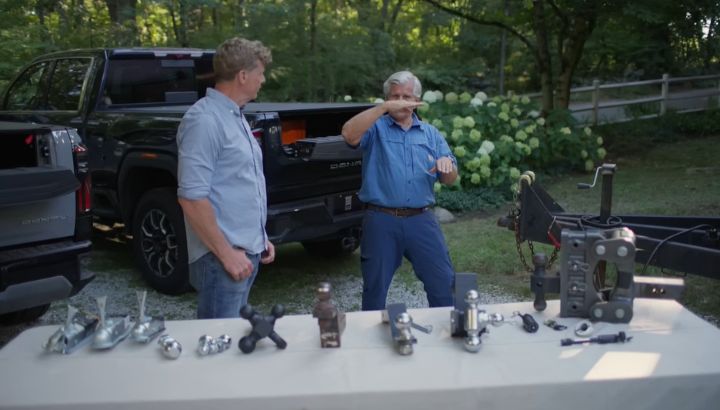
No, trailer hitches are not universal. Each hitch is vehicle-specific because the mounting brackets are engineered to match the factory frame holes of one specific make, model, and year. What is universal is the receiver tube opening size (1.25 inch or 2 inch) and the accessories that fit into it.
Trailer hitch shoppers confuse two different things when they ask about universality. The hitch itself (the steel assembly that bolts to your vehicle’s frame) is vehicle-specific, while the receiver tube opening that accepts ball mounts, bike racks, ladder racks, and trailer shanks follows universal SAE J684 hitch class standards. A 2-inch ball mount fits any 2-inch Class III, IV, or V receiver regardless of which vehicle the receiver is bolted to. To answer are trailer hitches universal, you have to separate the vehicle-side mounting from the accessory-side connection.
What Does It Mean For A Trailer Hitch To Be Universal?
A “universal” trailer hitch would be one that fits every vehicle without modification. Such a hitch does not exist in the consumer aftermarket because every vehicle has different factory frame geometry, different bolt hole positions, and different bumper and exhaust component placements. What is universal is the receiver tube standard, which lets any 2-inch shank accessory fit any 2-inch receiver.
This article covers permanent trailer hitch receiver compatibility specifically, not bumper-pull ball mount universality, hitch ball size universality, or trailer wiring connector universality. Each of those is a separate compatibility question with its own standards.
Trailer hitches fall under the broader category of vehicle towing equipment governed by SAE J684 hitch class standards. The class rating (I through V) standardizes the receiver tube opening and tongue weight rating, but the hitch’s structural mounting points are vehicle-specific.
The confusion between vehicle-side and accessory-side universality breaks down into two questions:
The vehicle-side question: “Will this hitch bolt to my truck?” The answer is almost always no for any random hitch because hitches are engineered for specific factory bolt hole patterns. Curt, Reese Towpower, Draw-Tite, and B&W all publish vehicle-specific fitment guides that list which hitch model fits which vehicle.
The accessory-side question: “Will this bike rack fit my hitch?” The answer is almost always yes within the same receiver class. A 2-inch shank bike rack fits any Class III, IV, or V receiver regardless of which vehicle the receiver is mounted on. A 1.25-inch shank rack fits any Class I or II receiver.
This two-sided nature of hitch compatibility creates marketing confusion. Some manufacturers sell “universal” ball mounts, “universal” anti-rattle pins, and “universal” hitch accessories that are genuinely interchangeable across vehicles. But “universal” trailer hitches that bolt to any vehicle do not exist for safety and engineering reasons.
On my own 2020 Ford F-250 with a factory Class IV receiver, I can swap between a Curt drop ball mount, a Kuat NV 2.0 bike rack, a Kargo Master Pro III hitch ladder rack, and an Andersen Rapid Hitch tightener without changing the hitch itself. All four accessories use 2-inch shanks that fit any Class IV receiver. The factory hitch, however, is specifically engineered for the F-250 frame and would not bolt to a Chevy Silverado or RAM 2500.
The takeaway: trailer hitches are not universal at the vehicle-mounting level, but the receiver tube opening and accessory shanks follow universal SAE standards that allow swapping accessories freely.
Are All Receiver Sizes The Same?
No, receiver sizes are not all the same. Trailer hitches use five standardized receiver opening sizes set by SAE J684 hitch class standards: Class I and II use a 1.25-inch opening, Class III and IV use a 2-inch opening, and Class V uses a 2.5-inch opening. Each size matches a specific shank size and tongue weight rating.
Here is a reference table of receiver sizes across all hitch classes:
| Hitch Class | Receiver Opening | Tongue Weight Rating | Gross Trailer Weight | Typical Vehicles | Common Accessories |
|---|---|---|---|---|---|
| Class I | 1.25 inch | 200 lbs | 2,000 lbs | Compact cars, subcompacts | 1-2 bike hanging racks, small utility trailers |
| Class II | 1.25 inch | 350 lbs | 3,500 lbs | Midsize sedans, small SUVs | 2-3 bike racks, light cargo carriers |
| Class III | 2 inch | 500-600 lbs | 6,000-8,000 lbs | SUVs, crossovers, minivans | 4-bike platform racks, hitch ladder racks |
| Class IV | 2 inch | 800-1,200 lbs | 10,000-14,000 lbs | Full-size pickups, large SUVs | 6-bike vertical racks, heavy cargo |
| Class V | 2.5 inch | 1,200-2,700 lbs | 20,000 lbs | Heavy-duty pickups, commercial | Industrial cargo carriers, heavy trailers |
The five class system creates a sliding scale of capacity from light-duty to heavy commercial.
Class I and II receivers share the 1.25-inch opening but differ in tongue weight rating. Class I tops out at 200 lbs while Class II handles 350 lbs. Both accept the same 1.25-inch shank accessories, including small bike racks, light cargo carriers, and small utility trailer ball mounts.
Class III and IV receivers both use the 2-inch opening but differ significantly in tongue weight rating. Class III tops out at 500-600 lbs, while Class IV handles 800-1,200 lbs. The 2-inch opening accepts a huge range of accessories: 4-bike platform racks, hitch ladder racks, cargo trays, ball mounts, and trailer shanks.
Class V receivers use the 2.5-inch opening and serve heavy commercial applications. Heavy-duty pickups (Ford F-350, F-450, Chevy Silverado 3500, RAM 3500) often have Class V receivers as standard or optional equipment. Adapter sleeves let standard 2-inch accessories fit into a 2.5-inch Class V receiver.
Cross-class accessory use is generally impossible without adapters. A 2-inch ball mount will not fit into a 1.25-inch Class II receiver. A 1.25-inch bike rack rattles freely in a 2-inch Class III receiver because the shank is too small. Match the accessory shank size to the receiver opening size for safe use.
On a job in Boulder in 2022, a customer brought me his 2018 Honda Civic with a Class I 1.25-inch receiver. He had purchased a Kuat NV 2.0 4-bike platform rack online without checking the shank size. The Kuat uses a 2-inch shank that would not fit his Class I receiver at all. The fix was returning the Kuat and buying an Allen Sports Deluxe 2-bike hanging rack with a 1.25-inch shank that fits his receiver and stays within the 200 lbs tongue weight rating.
The takeaway: receiver sizes follow five standardized classes with three different opening sizes (1.25 inch, 2 inch, 2.5 inch), and accessory shank size must match the receiver opening exactly.
Know More: How To Install A Trailer Hitch
Know More: How To Keep Hitch Bike Rack From Swaying
Why Do Trailer Hitches Need To Be Vehicle-Specific?
Trailer hitches need to be vehicle-specific because every vehicle has different factory frame geometry, different rear bumper and exhaust component placement, and different bolt hole patterns engineered into the rear frame rails. A hitch designed for a Toyota RAV4 will not bolt to a Honda Pilot even though both are similar-class SUVs.
The vehicle-specific engineering exists for four main reasons.
Factory frame geometry varies between makes and models. Each manufacturer designs the rear frame to balance crash performance, fuel tank protection, exhaust routing, and structural rigidity for that specific vehicle. The bolt holes for aftermarket hitch installation are pre-drilled at positions that work with the vehicle’s specific frame layout. A hitch designed for the Toyota RAV4’s frame would not align with the Honda CR-V’s pre-drilled holes.
Rear bumper and trim placement affects hitch design. Some vehicles have low rear bumpers that block standard hitch crossbar height. Others have decorative rear diffusers or sport-tuned bumper covers that interfere with hitch crossbar positions. Vehicle-specific hitches are engineered to clear these factory components without modification.
Exhaust component placement creates clearance requirements. The rear exhaust muffler, tailpipe, and heat shield positions vary between vehicles. A hitch designed without accounting for exhaust clearance can contact hot components and create fire risk or heat shield damage. Vehicle-specific hitches route the crossbar around the exhaust without contact.
Spare tire positioning matters on vehicles with rear-mounted spares. Jeep Wranglers, some Toyota 4Runners, and certain Ford Expeditions have rear-mounted spare tires that affect hitch design. Vehicle-specific hitches include spare tire clearance brackets or specialized geometry that accommodates the spare position.
The result is that Curt, Reese Towpower, Draw-Tite, and B&W all publish vehicle-specific fitment guides listing the correct hitch part number for each year, make, and model. Curt makes over 1,000 different hitch models to cover the US vehicle market. Reese Towpower offers a similar range.
The fitment system works through SKU matching. Each vehicle has a specific hitch part number that fits only that vehicle (or sometimes a small cluster of mechanically similar vehicles). Buying the wrong SKU wastes time and money because the hitch will not bolt to the frame without modification.
What this means: trailer hitches rules are vehicle-specific for safety and engineering reasons, with manufacturer fitment guides providing the correct part number for each vehicle.
Are Hitch Accessories Universal Within The Same Receiver Class?
Yes, hitch accessories are universal within the same receiver class. Any 2-inch shank accessory fits any 2-inch Class III, IV, or V receiver regardless of which vehicle the receiver is mounted on. Any 1.25-inch shank accessory fits any 1.25-inch Class I or II receiver. The accessory side of the connection follows universal SAE J684 standards.
The universal accessory side of hitch compatibility is what creates most of the consumer confusion. The receiver tube opening is standardized, which means accessories swap freely across vehicles.
A Kuat NV 2.0 4-bike platform rack with a 2-inch shank fits any Class III, IV, or V receiver. The same rack works on a Subaru Outback with a Class III hitch, a Ford F-150 with a Class IV hitch, or a RAM 3500 with a Class V hitch (with a sleeve adapter).
A Kargo Master Pro III hitch ladder rack with a 2-inch shank fits the same range of receivers. Contractors who change tow vehicles can transfer the same hitch ladder rack from old truck to new truck without buying a new rack, as long as the new truck has a 2-inch receiver.
A Curt drop ball mount with a 2-inch shank fits the same range of receivers. The drop measurement (2-inch, 4-inch, 6-inch, 8-inch) is selected to match the trailer coupler height, but the shank itself fits any 2-inch receiver.
An Andersen Rapid Hitch tightener with a universal 2-inch design fits any 2-inch receiver regardless of vehicle make. The tightener attaches to the receiver tube and the rack shank to eliminate side-to-side play. The same tightener moves between vehicles when you upgrade trucks.
The exception is some specialty accessories that include vehicle-specific brackets or extensions. Some hitch bike racks include extension arms that reach over high tailgate panels on specific vehicles. Some hitch ladder racks include vehicle-specific brackets for clearance over rear bumpers. Verify any specialty accessory’s fitment before purchasing.
For 1.25-inch Class I and II receivers, the same universality applies. Any 1.25-inch shank accessory fits any 1.25-inch receiver. The Allen Sports Deluxe 2-bike rack works on any Class I or II receiver regardless of vehicle.
On my own setup, I move the same Andersen Rapid Hitch tightener between my Ford F-250 (Class IV receiver) and my wife’s Subaru Outback (Class III receiver) depending on which vehicle is hauling at any given moment. The tightener is universal within the 2-inch receiver class.
The takeaway: hitch accessories are universal within the same receiver class, with the 2-inch class covering Class III, IV, and V receivers and the 1.25-inch class covering Class I and II receivers.
What Trailer Hitch Compatibility Mistakes Do People Make Most Often?
The five most common trailer hitch compatibility mistakes are buying a hitch designed for the wrong vehicle, mismatching accessory shank size to receiver opening, ignoring tongue weight rating limits, assuming higher receiver classes accept lower-class shanks without adapters, and skipping the manufacturer fitment guide.
The specific compatibility mistakes I see most often in 16 years of installations:
Buying a hitch designed for the wrong vehicle is the most expensive mistake. Some customers purchase a generic “Class III hitch” from a third-party seller without verifying the SKU matches their vehicle. The hitch arrives, does not bolt to the frame, and has to be returned at the customer’s shipping expense. The fix is always using the Curt, Reese Towpower, or Draw-Tite fitment guide to find the correct part number for your specific year, make, and model.
Mismatching accessory shank size to receiver opening is the second most common mistake. A 2-inch shank bike rack will not fit into a 1.25-inch Class II receiver. A 1.25-inch shank rack will rattle freely in a 2-inch Class III receiver because the shank is undersized. Adapter sleeves exist for some scenarios but always introduce additional tolerance gaps that cause rattle and reduce capacity.
Ignoring tongue weight rating limits is a subtle mistake. A customer might buy a 4-bike platform rack rated for 200 lbs (rack plus 4 bikes) and install it on a Class I receiver rated for 200 lbs tongue weight. The math works on paper but leaves no safety margin for road bumps, sharp braking, and dynamic loads. Choose receiver class with at least 25% headroom above your actual loaded weight.
Assuming higher receiver classes accept lower-class shanks without adapters causes rattle and instability. A 1.25-inch shank in a 2-inch receiver requires a Curt 21500 or similar adapter sleeve to fill the gap. Without the adapter, the rack rattles violently and the small shank can deform under load. Always use proper adapters when crossing receiver classes.
Skipping the manufacturer fitment guide leads to ordering the wrong part. Curt and Reese both publish online fitment guides that include the specific part number for every vehicle they cover. Skipping the 60-second fitment check costs $50-$150 in return shipping when the wrong hitch arrives.
On a job in Aurora in 2023, a customer brought me a Curt Class III hitch he had purchased online for his 2019 Toyota RAV4. The hitch was designed for the 2018 Toyota Highlander and would not bolt to the RAV4’s frame. The bolt hole pattern was off by about 1.5 inches across both sides. The customer had to return the hitch and re-order the correct RAV4-specific part number, losing $35 in shipping costs and three weeks of project time.
The takeaway: every hitch compatibility mistake is preventable with a 60-second fitment guide check before purchase and proper receiver class selection.
How Do I Find The Right Hitch For My Specific Vehicle?
To find the right hitch for your specific vehicle, visit the Curt, Reese Towpower, Draw-Tite, or B&W online fitment guide and enter your vehicle’s year, make, and model. Each manufacturer publishes a vehicle-specific part number that fits only your vehicle (or sometimes a small cluster of mechanically similar vehicles). Cross-check the receiver class against your towing or accessory needs.
The vehicle-specific hitch selection process has four steps.
Identify your towing or accessory needs first. Determine whether you need a hitch for trailer towing (and what trailer gross weight), hitch-mounted bike racks (and how many bikes), hitch ladder racks (for contractor use), or cargo carriers (for general hauling). The intended use drives the receiver class requirement.
Match the use case to the receiver class. Class I (200 lbs tongue, 2,000 lbs gross trailer) covers light-duty needs. Class II (350 lbs tongue, 3,500 lbs gross trailer) covers most 2-3 bike rack setups. Class III (500-600 lbs tongue, 6,000-8,000 lbs gross trailer) is the standard for most SUV and crossover applications. Class IV (800-1,200 lbs tongue, 10,000-14,000 lbs gross trailer) handles full-size pickup needs. Class V serves heavy-duty applications.
Use the manufacturer fitment guide to find the correct part number. Curt covers over 1,000 vehicle applications. Reese Towpower offers a similar range. Both manufacturers’ guides take 60 seconds to use: select your vehicle year, make, and model, and the guide returns the correct hitch part number with installation instructions.
Verify the receiver class meets your needs before purchasing. Some vehicles offer multiple hitch class options (typically Class III and Class IV for full-size SUVs). Choose the higher class if your loaded weight is within 50 lbs of the lower class rating. Class IV adds about $30-$50 over Class III but provides significant additional capacity headroom.
The fitment guides also indicate any vehicle-specific installation notes. Some installations require dropping the exhaust heat shield, removing the spare tire, or trimming a small section of the rear bumper plastic. Knowing these requirements before purchase helps you plan the installation properly.
What this means: hitch selection takes 5 minutes with a manufacturer fitment guide and prevents the costly mistake of buying a hitch that does not fit your vehicle.
Frequently Asked Questions
Are Curt And Reese Hitches Interchangeable?
No, Curt and Reese trailer hitches are not interchangeable at the vehicle-mounting level because each brand engineers their own bolt hole patterns and bracket designs for each specific vehicle. A Curt Class III hitch for a Toyota RAV4 has different mounting geometry than a Reese Class III hitch for the same vehicle, even though both fit the same vehicle and provide the same towing capability.
The accessory side is interchangeable. A Curt 2-inch shank ball mount fits any Reese 2-inch Class III, IV, or V receiver because both follow SAE J684 hitch class standards for the receiver opening. The same applies to Draw-Tite, B&W, and any other major hitch manufacturer. Accessories work across brands; the hitches themselves are brand-specific to each vehicle application.
Will Any 2-Inch Hitch Accessory Fit My 2-Inch Receiver?
Yes, any 2-inch shank hitch accessory fits any 2-inch Class III, IV, or V receiver regardless of brand or vehicle. The 2-inch receiver opening is standardized by SAE J684 hitch class standards, so a Kuat NV 2.0 bike rack, a Curt drop ball mount, a Kargo Master Pro III hitch ladder rack, and an Andersen Rapid Hitch tightener all fit into the same receiver.
The only limitations are tongue weight rating (the accessory plus its load cannot exceed the receiver’s rated capacity) and ground clearance (some accessories sit lower than others and may scrape on steep driveways). Verify both the tongue weight rating and the ground clearance for your specific use case before purchasing the accessory. Accessories are universally compatible within the same receiver class.
Can I Use A 1.25-Inch Accessory In A 2-Inch Receiver?
You can use a 1.25-inch accessory in a 2-inch receiver only with a proper adapter sleeve like the Curt 21500 ($25-$40). The adapter sleeve fills the 0.75 inch gap between the smaller shank and the larger receiver opening, providing structural support and preventing rattle.
Without the adapter, the 1.25-inch shank in a 2-inch receiver creates excessive play that causes violent rattle, accelerates wear on the shank and receiver interior, and reduces the accessory’s effective capacity. The shank can also deform under load due to the unsupported gap. Always use a proper adapter sleeve when crossing receiver class sizes, and add an anti-rattle pin like the Andersen Rapid Hitch tightener to eliminate any residual play.
Are Factory Hitches Different From Aftermarket Hitches?
Factory hitches and aftermarket hitches are generally equivalent in capacity and quality for the same receiver class. Both meet SAE J684 hitch class standards and both bolt to the vehicle’s pre-engineered frame mounting points. Factory hitches typically integrate more cleanly with the rear bumper and may have powder-coat finishes matched to the vehicle.
Aftermarket hitches from Curt, Reese Towpower, Draw-Tite, and B&W often offer higher receiver classes than factory hitches at lower prices. A factory Class III hitch from Toyota might cost $400-$500 installed at the dealer, while a Curt Class IV hitch for the same vehicle costs $250-$300 plus installation. Aftermarket hitches usually carry lifetime structural warranties that match or exceed factory hitch coverage.
Will A Hitch From An Older Vehicle Fit A Newer Model?
No, a hitch from an older vehicle typically does not fit a newer model even of the same make and trim. Vehicle manufacturers update frame designs, bumper geometry, and exhaust routing across model years, which changes the hitch mounting requirements. A 2015 Toyota RAV4 hitch will not fit a 2020 Toyota RAV4 because the 2019 redesign changed the rear frame geometry.
The exception is some vehicles that maintain identical frame designs across multiple model years. Some Ford Super Duty trucks share hitch fitment from 2017-2022, for example, because the frame design was unchanged across those years. Always verify the specific year range using the Curt or Reese fitment guide before assuming an older hitch will fit a newer vehicle. Year ranges are listed in the fitment specifications.
How Do I Tell What Class My Trailer Hitch Is?
You tell what class your trailer hitch is by reading the label or stamp on the side of the receiver tube. SAE J684 hitch class standards require manufacturers to mark the hitch class (I through V), the tongue weight rating in lbs, and the gross trailer weight rating in lbs directly on the receiver tube. The label is typically a metal sticker or stamped marking on the side or bottom of the tube.
If the label is missing or unreadable, measure the receiver opening size. A 1.25-inch opening indicates Class I or II, a 2-inch opening indicates Class III, IV, or V, and a 2.5-inch opening indicates Class V. Check the manufacturer’s documentation or owner’s manual for the exact tongue weight rating, since Class I (200 lbs) and Class II (350 lbs) share the same 1.25-inch opening but have different ratings.
The Bottom Line On Are Trailer Hitches Universal
Trailer hitches are not universal at the vehicle-mounting level because each hitch is engineered with vehicle-specific bolt hole patterns and bracket geometry. A Curt Class III hitch for a Toyota RAV4 will not bolt to a Honda Pilot, even though both are similar-class SUVs.
What is universal is the receiver tube opening, which follows SAE J684 hitch class standards. Any 2-inch shank accessory (bike rack, ball mount, hitch ladder rack, cargo tray) fits any 2-inch Class III, IV, or V receiver regardless of brand or vehicle. Class I and II receivers share a 1.25-inch opening, while Class V uses 2.5-inch.
Use the Curt, Reese Towpower, or Draw-Tite online fitment guide to find the correct hitch part number for your specific year, make, and model. Match accessory shank size to your receiver class, and use adapter sleeves when crossing class sizes. Done right, you can swap hitch accessories freely between vehicles even though the hitches themselves are vehicle-specific.